Review by Dragan Antulov
3½ stars out of 4
Science fiction fans are seldom satisfied with the way their
favourite genre is used in films, especially those produced
in Hollywood. More often than not filmmakers totally forget
the meaning of "science" in the term "science fiction", and
such films ignore basic scientific facts, as well as
elementary logic. This is especially the case with time
travel films. Screenwriters of such films are more than
eager to embrace the concept of time travel (which is rather
controversial in the realm of established science), but they
seldom pay attention to some mind-boggling issues associated
with it, like Grandfather Paradox. Fortunately, there are
few filmmakers ready to approach time travel with these
problems in mind. One of them was young Canadian director
James Cameron. In 1984 he co-wrote and directed THE
TEMINATOR, low-budget science fiction film that would launch
one of the most spectacular careers in modern Hollywood and
also become one of the most influential films of its time.
Script for THE TERMINATOR, written by Cameron and his
producer Gale Anne Hurd, was based on the original
screenplay by Harlan Ellison (fact established after serious
litigation). The plot begins in Los Angeles 2029 AD. The
world was ravaged by nuclear holocaust and the surviving
humans are fighting desperate war against sentient machines.
>From this world two time travellers arrive to Los Angeles in
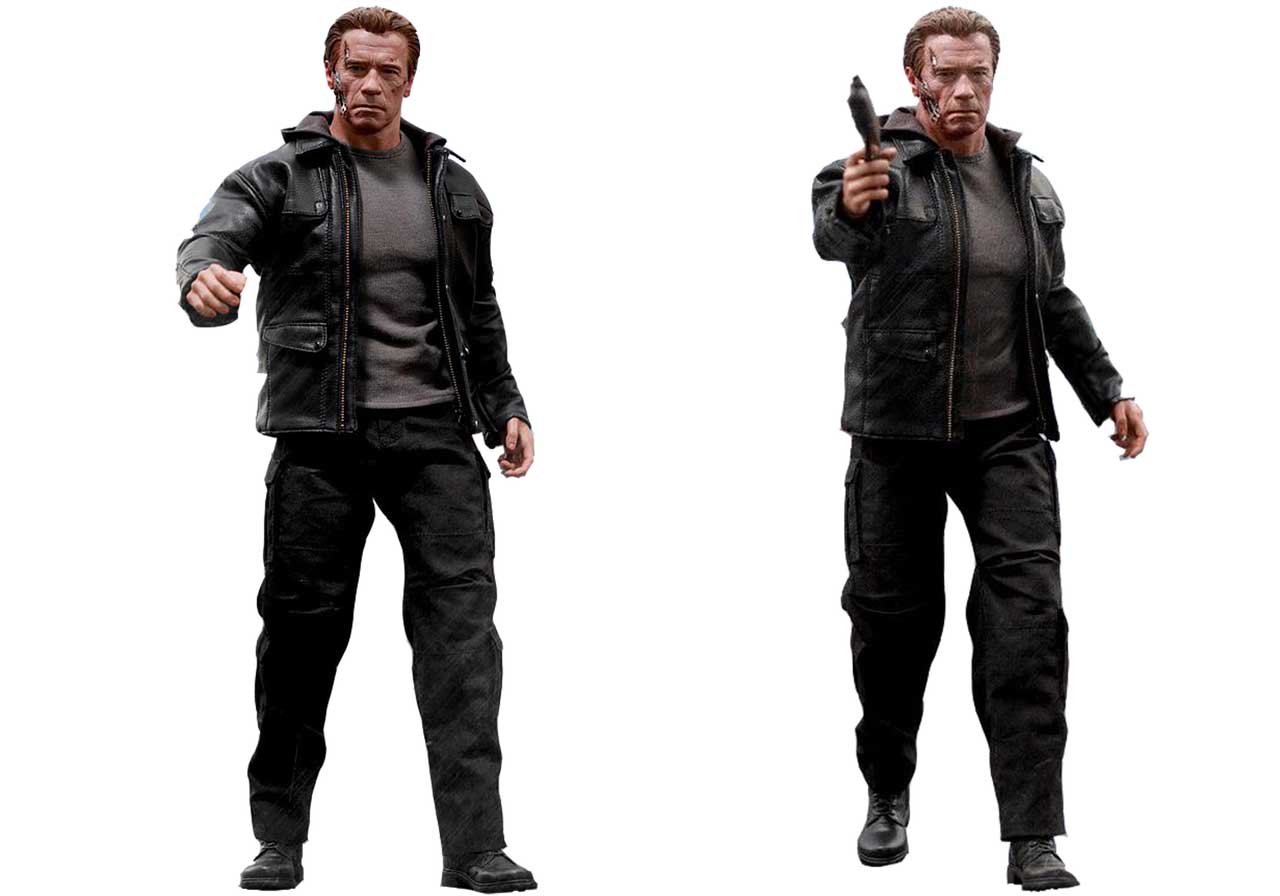
1984. The first one is Terminator (played by Arnold
Schwarzenegger), human looking but deadly and seemingly
indestructible cyborg. His mission is to kill Sarah Connor
(played by Linda Hamilton), future mother of John Connor,
charismatic leader of human resistance. Another time
traveller is Kyle Reese (played by Michael Biehn), Connor's
soldier from the future, and his mission is to protect the
mother of his commander. When he finds Sarah Connor, she
doesn't believe his story, but all her suspicions are swept
away when the unstoppable, remorseless and invulnerable
killer starts chasing them across streets of Los Angeles.
Today most people think of James Cameron as Hollywood's
greatest and most successful megalomaniac whose trademark is
big budget of his movies. In 1984 the budget for his
groundbreaking film was quite low, even for the standards of
the time. However, even in such conditions, Cameron's talent
of superb filmmaker became more than evident. Few filmmakers
are able to achieve things Cameron had done with THE
TERMINATOR - to create successful combination of interesting
and thought-provoking science fiction, powerful human drama
and action-packed thrillride.
Unlike most of the other time travel movies, THE TERMINATOR
takes time travel quite seriously and the Grandfather
Paradox here builds the plot instead of destroying its
plausibility. In this film the future is set and the
characters are aware than that they can't escape it; instead
of trying to change their destiny, they fight to preserve
it, no matter how ugly and depressing it might be in the
end. The atmosphere of impending doom could be sensed
throughout the film. Cameron, obviously inspired by the
heightened Cold War tensions of Reagan years, and worried
about possibility of sophisticated and automated weapons
systems running out of control, uses these fears to build
the vision of future apocalypse, which is even more
frightening, because it shares many elements with the world
of 1984. Low budget, which forced Cameron to shoot this film
at night and in the back alleys of Los Angeles, actually
helps this film. In this dark, cold and unforgiving world of
1984 Los Angeles we could see glimpses of 2029 - bums in the
street, which are not very different from the surviving
post-holocaust humans, or robot factories that probably use
the same technology of future killing machines. This was
good opportunity for Cameron to establish his trademark -
ambivalent portrayal of technology. While he obviously
admires efficiency of machines and their obvious superiority
over frail humans, Cameron in this film also shows
frightening consequences of technology running amok and
turning their former human masters into slaves.
Thing that separates THE TERMINATOR from most of the other
science fiction films is not just technical superiority or
intelligent message. Cameron also brings very strong human
dimension to this film. Characters in this film aren't
cardboard or stereotypical - in relatively short amounts of
time, before the action sets in, we meet them as
three-dimensional, convincing human being and later we
sympathise with their plight. This is the technique that
would serve Cameron very well in his later films like ALIENS
or THE ABYSS. For that he had to rely on very good actors.
Although the first actor associated with this film happens
to be Arnold Schwarzenegger, his non-human character of
Terminator is convincing more because of his frightening
physical appearance. Schwarzenegger's one-liners (including
his trademark phrase "I'll be back"), spoken in robotic
monotone and with heavy Austrian accent, didn't require much
of the acting ability. On the other hand, such ability was
perfectly demonstrated by two other leads. Linda Hamilton
was excellent choice for the role of Sarah Connor; not very
attractive in a physical sense, she is quite convincing as
an average woman caught in nightmarish situation. Her slow
evolution from clueless and helpless damsel in distress to
tough feminist role model in wonderful to watch. Michael
Biehn, one of the most underused actors of modern Hollywood,
is also great as her heroic and vulnerable partner; the
audience can sense the pain and anguish on his troubled
face. Finally, Cameron relies on the services of very
capable character actors Lance Henriksen and Paul Winfield
as police detectives; their roles as voices of reason and
"normalcy" actually are the closest equivalent of comic
relief in this grim tale.
Engaging story, superb acting and moviemaking craftsmanship
- all that ensured that THE TERMINATOR remains as one of the
best films of 1980s. Unfortunately, the reputation of this
film was later influenced by its more expensive, more
spectacular, better-hyped but ultimately inferior 1991
sequel. Compared with it, THE TERMINATOR looks rather cheap,
at first glance almost indistinguishable from the hundreds
of its own C-grade rip-offs made in late 1980s. Person that
could be responsible for such impression is Brad Fiedel,
author of musical score, which is hardly impressive except
the main theme. This unimpressive musical score, however, is
hardly the reason to view THE TERMINATOR as less than
excellent piece of science fiction cinema.
Copyright © 2001 Dragan Antulov
|