|
Review by Dustin Putman
1½ stars out of 4
"The Day After Tomorrow" is writer-director Roland Emmerich's fourth
chance to do justice to the science-fiction genre (after 1994's boderline-plagiaristic
"Stargate," 1996's insipid and corny "Independence Day," and 1998's
just-plain-bad "Godzilla"), and he is no closer to succeeding at making
a smart, taut, well-written motion picture than he was ten years ago.
Even his attempt at historical drama, 2000's "The Patriot," was a
preachy, flag-waving bust. Through all five of these features, Emmerich
has had a knack for concocting grandly themed, highly accessible,
intriguingly plotted films and then completely watering them down
in wasted potential, giant cliches, and ridicule-worthy scripting.
"The Day After Tomorrow" reminds of the Irwin Allen films of the '70s
(i.e. "The Poseidon Adventure," "The Towering Inferno"), but exempt
of their undeniable fun factor and sharper-than-usual character depth.
As cheesy as Allen's oeuvre may have been, they were an example of
great subtlety and plausibility in comparison to what Emmerich's slick,
empty, and often laughable latest production has to offer.
Just days after climatologist Jack Hall (Dennis Quaid) warns that
global warming may be only fifty to one-hundred years away, the world's
northern hemisphere is suddenly stricken by massive hurricanes, floods,
and blizzards, destroying entire cities in their wake. With his teenage
son, Sam (Jake Gyllenhaal), off in Manhattan at a scholastic competition
when catastrophe hits, Jack promises Sam that he will make it from
D.C. to New York to save him, no matter what. In order to do this,
however, Jack and Sam will both have to fight for survival as the
new Ice Age, taking temperatures down to 150 degrees below zero, approaches.
An environmental cautionary tale and a big-budget, special effects-laden
disaster flick, "The Day After Tomorrow" takes a potentially thought-provoking
premise and flounders the results miserably. The most treacherous
culprit is the asinine screenplay by Roland Emmerich and Jeffrey Nachmanoff,
which not only steals from Emmerich's own "Independence Day," but
is more than content to parade out an endless, ever-wearying line
of cliches, ludicrous plotting and dialogue, and paper-thin stock
characters whom the viewer forms no relationship with. There's a friendly
bum (Glenn Plummer) and his trusty dog. There's a dedicated nurse
(Sela Ward) who sacrifices her own safety for a young cancer patient.
There's a news anchor on the streets of Hollywood who does his report
feet away from one of the cyclones ravaging the city (he gets what
he deserves in the long run for being so stupid). There's even a threadbare
romantic subplot between Sam and cute classmate Laura (Emmy Rossum)
that is actually brought up in an earnest, calm fashion by another
character mere seconds after they all were nearly wiped out in a tidal
wave. When the fatally cold temperatures hit, turning people into
frozen popsicles in mere seconds, the lead actors conveniently are
able to escape such maladies by simply closing the door of a building
or taking shelter in a flimsy tent.
Yes, "The Day After Tomorrow" is the kind of movie one should check
their brain at the door of, but is it too much to ask to treat the
subject matter with some form of maturity and realism? Even a set
of laid ground rules would have helped had director Emmerich not violated
them whenever it was convenient to the plot. Instead, he condescends
to his audience by expecting them to be dimwits with IQ's in the single
digits. The consistent, innumerable flaws found in the writing block
most of the cathartic entertainment value that might have been had
from the story. Disappointing, also, is how briefly and vaguely the
weather disasters are portrayed onscreen. After a five minute scene
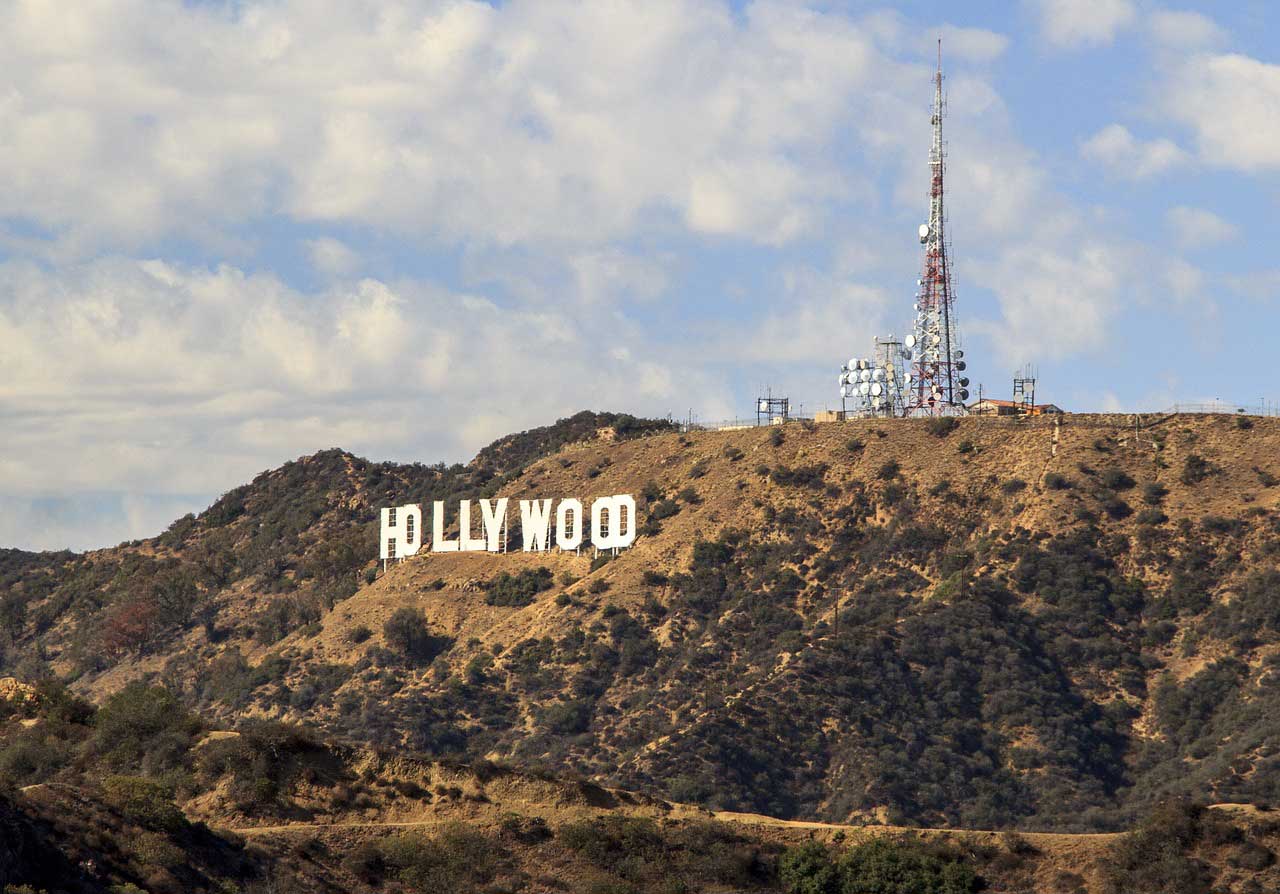
centering on the destruction of Los Angeles by tornadoes (and including
the obligatory shot of the Hollywood sign being ripped to shreds),
the city is never seen or heard from again. The majority of the seen
disasters occur in Manhattan (very few other places being torn apart
in the world are glimpsed), but again, it is over nearly before it
begins. With most of the action set-pieces and money shots exhausted
by the end of the first hour, Roland Emmerich's largest hindrance
is exposed. With no development placed on the characters and their
relationships outside of the rudimentary, there is nothing to carry
the viewer through the long, slow, monotonous second half. Focus alternates
between Sam, as he takes shelter in a library, and Jack, who braves
the snow and frigid temperatures to trek hundreds of miles (by foot)
to reach his son. The film forgets to give us a reason to care, and
its negligence in building real personalities for its stick characters
only makes the subdued final hour all the more patience-testing.
"The Day After Tomorrow" has the possibility of becoming a camp classic
for its failure to accumulate intended laughs while somehow turning
its more serious moments into genuine howlers. The exception is its
heavy-handed but still effective jabs at today's ailing political
climate. The President of the United States (Perry King) is portrayed,
intentionally like George W. Bush, as a useless figure who relies
on everyone else to tell him what to do, while the Vice President
(Kenneth Walsh) isn't seen in a much more positive light. When most
movies portray politicians with honorability and intelligent, it is
refreshing to finally see one that acknowledges their flaws and denies
sugarcoating. It is too bad, then, that the rest of the picture isn't
nearly as astute or canny. The usually great actors, particularly
Dennis Quaid (2003's "Cold Creek Manor") and Jake Gyllenhaal (2002's
"The Good Girl"), struggle to keep straight faces while having to
recite such cornball dialogue it is amazing no one realized how bad
it was while they filmed it.
The visual effects in "The Day After Tomorrow " are professional eye-candy,
and the tidal wave sequence is good for a few valid thrills, but that
is where the excitement ends. Most of the running time is merely plodding,
and the film's portrayal of a frozen Manhattan wasteland was far more
chilling and convincing in 2001's brilliant "A.I.: Artificial Intelligence."
Likewise, the twisters in 1996's "Twister" were better. Regrettably,
the film even pales in comparison to "Independence Day," which was
also just one stereotypical, creatively discouraging moment after
the next, but at least felt like its scope was larger. So much could
have been done with the ingenious premise of global warming. The tragedy
of "The Day After Tomorrow" is that it does nothing at all with these
boundless story possibilities, happy to be lazy and patronizing, instead.
Mr. Emmerich—you've officially just struck out.
Copyright © 2004 Dustin Putman
|